Introduction: What is an Atrial Septal Defect?
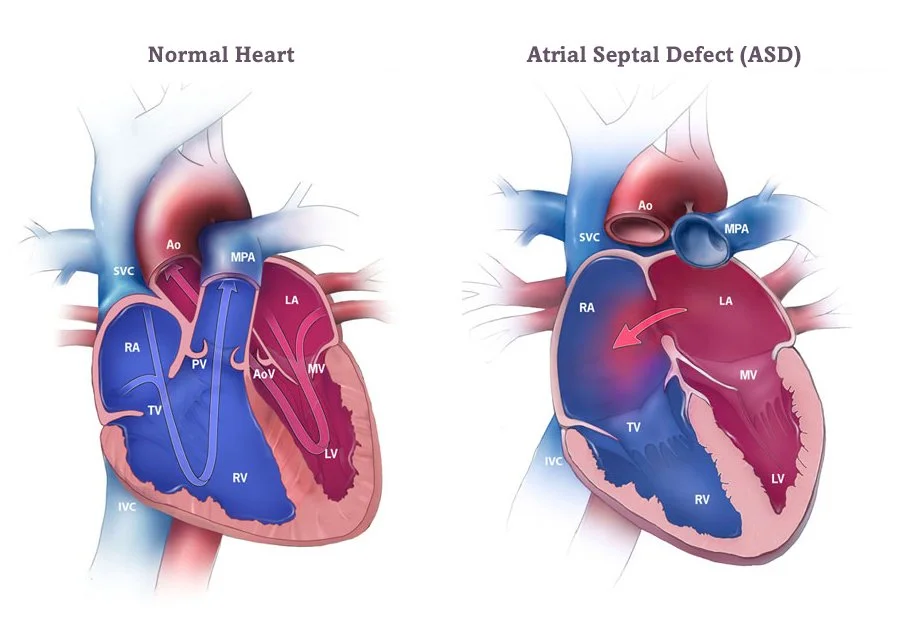
An Atrial Septal Defect (ASD), often called a “hole in the heart,” is one of the most common types of congenital heart defects, meaning it is present at birth. It involves an abnormal opening in the atrial septum, the wall of muscle that separates the heart’s two upper chambers (the right and left atria).
This opening allows oxygen-rich blood from the left atrium to leak into the right atrium. Normally, the right atrium handles oxygen-poor blood returning from the body to be sent to the lungs. This extra blood volume forces the right side of the heart and the lungs to work harder. While small ASDs may never cause problems and can close on their own, larger defects can lead to serious complications over time, including heart failure, pulmonary hypertension and stroke.
Understanding ASD—its types, symptoms, and modern treatments—is the first step toward effective management and a full, healthy life.
Types of Atrial Septal Defects
Not all ASDs are the same. They are classified based on their location within the atrial septum and the nature of the defect. The four main types are:
- Ostium Secundum occurs In the middle of the atrial septum. The most common type, accounts for about 80% of all ASD cases.
- Ostium Primum occurs in the lower part of the atrial septum, near the heart valves. The second most common type (15-20% of ASDs). Often associated with other heart valve defects.
- Sinus Venosus occurs in the upper or lower back part of the septum. A rarer type (5-6% of ASDs). Frequently associated with abnormal drainage of the pulmonary veins.
- Coronary Sinus involves a missing wall between the coronary sinus (a heart vein) and the left atrium. The rarest type. Usually occurs with other complex heart defects.
Another related condition is a Patent Foramen Ovale (PFO), which is a small, flap-like opening that is a remnant of fetal circulation. While present in about 25% of people, a PFO is typically not considered a true ASD and often requires no treatment unless it is linked to other issues like stroke.
Symptoms and Causes: Why Do ASDs Happen?
Recognizing the Signs
Many people with an ASD, especially children, have no obvious symptoms. When symptoms do occur, they often develop in adulthood, typically by age 40. These arise from the heart and lungs working under extra strain.
Common symptoms include:
- Shortness of breath, especially during physical activity.
- Fatigue or tiring easily.
- Heart palpitations, a sensation of a fluttering or pounding heartbeat.
- Swelling in the legs, feet or abdomen.
- In children, signs can include poor growth, recurrent respiratory infections or a heart murmur detected by a doctor.
What Causes an ASD?
The exact cause is not always clear, but ASDs occur when the heart doesn’t form completely during fetal development. Genetic factors play a significant role. Changes or mutations in specific genes like NKX2-5, GATA4 and TBX5 are strongly associated with ASD and other congenital heart defects. Certain genetic syndromes, such as Holt-Oram syndrome, also have a high incidence of ASD.
Maternal factors during pregnancy can increase risk, including:
- Infections like rubella (German measles).
- Use of alcohol, tobacco or certain substances like cocaine.
- Pre-existing conditions such as diabetes or lupus.
Diagnosis and Evaluation of ASD
If an ASD is suspected based on symptoms or a detected heart murmur, a cardiologist will recommend tests to confirm the diagnosis, determine the defect’s size and location and assess its impact on the heart.
Key diagnostic tests include:
- Transthoracic Echocardiogram (TTE): This is the primary and most important test. It uses ultrasound to create detailed images of the heart’s structure and function, allowing doctors to visualize the hole and measure the blood flow across it.
- Electrocardiogram (ECG/EKG): Checks for abnormal heart rhythms (arrhythmias) and signs of heart strain.
- Chest X-ray: May show enlargement of the right side of the heart or changes in the lung’s blood vessels.
- Transesophageal Echocardiogram (TEE): Provides even more detailed images by inserting a small ultrasound probe down the esophagus, closer to the heart. This is often used to guide treatment planning.
Treatment Pathways: From Watchful Waiting to Repair
The treatment plan for an ASD depends entirely on its size, location and whether it is causing symptoms or heart strain.
1. Monitoring (Watchful Waiting)
Small ASDs (often less than 5mm) that are not causing symptoms or heart enlargement may simply be monitored over time with regular echocardiograms. Many small defects, especially in children, close on their own.
2. ASD Closure Procedures
Repair is typically recommended for larger defects that cause right heart enlargement, significant blood shunting, or symptoms. Closing the hole prevents long-term complications. There are two main approaches:
- Transcatheter Closure: This is a minimally invasive procedure. A cardiologist threads a thin catheter through a vein in the groin up to the heart. A special closure device (like a plug or a double umbrella) is then positioned through the catheter to seal the hole. Recovery is usually quick, with many patients resuming normal activity within a week.
- Surgical Closure: For very large ASDs, defects in certain locations (like sinus venosus), or when other heart repairs are needed, open-heart surgery may be necessary. A surgeon makes an incision in the chest and closes the hole directly with stitches or a patch. Recovery from surgery takes longer but is highly effective.
3. Medications
Medications cannot close an ASD, but they can help manage symptoms. These may include drugs to control heart rhythm, reduce fluid buildup, or lower pressure in the lungs.
Living with an ASD: Prognosis and Life Expectancy
The outlook for individuals with an ASD is excellent, especially with timely treatment.
- After Successful Closure: Children and young adults who undergo ASD repair generally have a normal life expectancy and can participate in full physical activity without restrictions. For older adults who have repair, life expectancy improves significantly compared to leaving the defect untreated, though it may be slightly shorter than for peers without a heart history.
- Long-Term Care: Regular follow-up with a cardiologist is important, even after a successful procedure, to ensure long-term heart health.
- Pregnancy Considerations: Women with an unrepaired ASD or a repaired ASD with residual issues should consult a cardiologist before pregnancy, as the increased blood volume can stress the heart.
A Note on Atrial Septal Defect in Nigeria
Comprehensive, nationwide data on the prevalence and outcomes of Congenital Heart Defects (CHD) like ASD in Nigeria is an area requiring further research and centralized reporting. Available global epidemiological studies indicate a prevalence of ASD of approximately 1.6 per 1,000 live births. While specific Nigerian statistics were not available in the data reviewed for this article, CHDs remain a significant pediatric health concern worldwide.
The management pathway—diagnosis via echocardiography and treatment through device closure or surgery—is well-established globally. The key for optimal outcomes in any population, including Nigeria, is increased awareness, accessible diagnostic services, and specialized cardiac care to ensure timely intervention and prevent the serious long-term complications of untreated ASD.
Conclusion: A Manageable Condition
An atrial septal defect diagnosis can be concerning, but it is important to know that it is a highly treatable condition. Modern medicine offers safe and effective solutions, from careful monitoring to minimally invasive repairs. If you or your child has been diagnosed with an ASD, the most important step is to partner with a trusted cardiology team to determine the best personalized management plan. With proper care, individuals with ASD can lead full, active, and healthy lives.
Disclaimer: This article is for informational purposes only and does not constitute medical advice. Please consult a qualified healthcare professional for diagnosis and treatment.