Understanding Diagnosis, Treatment, and Life with VSD in Nigeria
What Is a Ventricular Septal Defect (VSD)?
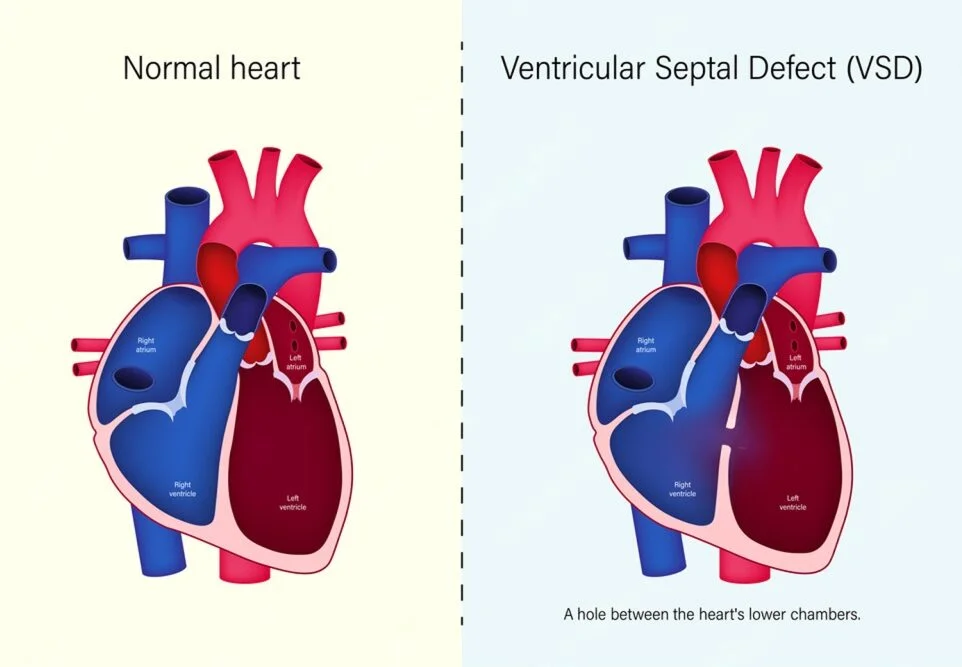
A Ventricular Septal Defect (VSD) is a congenital heart defect, meaning it is present at birth. It is characterized by a hole in the ventricular septum, which is the muscular wall that separates the heart’s two lower pumping chambers, the right and left ventricles.
This abnormal opening allows oxygen-rich blood from the left ventricle to mix with oxygen-poor blood in the right ventricle. Normally, these two blood streams are kept separate. This mixing forces the heart and lungs to work harder.
VSD is the most common congenital heart disease. Many small VSDs close on their own and cause few problems. However, a larger VSD can lead to serious complications, including permanent damage to the heart and lungs, if not properly managed.
Types of Ventricular Septal Defects
VSDs are classified based on their location within the ventricular septum. Understanding the type is crucial for determining the best treatment approach.
- Perimembranous (Membranous) is located in the upper part of the septum, near the heart valves. This is the most common type. It accounts for approximately 70-80% of all VSD cases.
- Muscular, Found within the muscular, lower part of the septum. There can be more than one hole in this area. Makes up about 5-20% of cases. This type has the highest chance of closing on its own.
- Inlet (AV Canal Type) is situated near where blood enters the ventricles through the tricuspid and mitral valves. A less common type, often associated with other heart conditions.
- Outlet (Supracristal/Subarterial) is located near the pulmonary and aortic valves, where blood exits the heart. More common in some Asian populations. It is associated with a risk of aortic valve prolapse.
Symptoms and Causes: Why Does VSD Happen?
Recognizing the Signs
Symptoms of a VSD depend entirely on the size of the hole and the amount of blood leaking through it. Many children with a small VSD have no symptoms at all.
When symptoms do occur, they typically appear in infants between 4 to 6 weeks of age, after pulmonary vascular resistance naturally decreases. Common symptoms include:
- In Infants: Poor feeding, sweating or fatigue during feeds, fast or labored breathing, slow weight gain or failure to thrive, and frequent respiratory infections.
- In Older Children & Adults: Shortness of breath, especially during physical activity, easy tiring, and a heart murmur.
What Causes a VSD?
The exact cause is often unknown. The heart develops during the first eight weeks of pregnancy and a VSD occurs when the muscular wall separating the ventricles fails to form completely.
Certain factors can increase the risk:
- Genetic Conditions: Such as Down syndrome.
- Family History: A history of congenital heart defects.
- Maternal Factors: Illness during pregnancy (like rubella), uncontrolled diabetes, use of certain medications or alcohol, and smoking.
Diagnosis: Confirming a Ventricular Septal Defect
A VSD is often first suspected when a doctor hears a characteristic heart murmur—a whooshing sound caused by turbulent blood flow—during a routine checkup with a stethoscope.
The primary tool for confirming the diagnosis is an echocardiogram (echo). This ultrasound of the heart provides detailed images that show:
- The exact location and size of the VSD.
- The amount of blood shunting through the hole.
- The impact on heart chamber size and function.
- The pressure in the lungs.
Other tests, such as an electrocardiogram (ECG) or chest X-ray, may be used to gather additional information about the heart’s rhythm and structure.
Treatment Pathways: From Monitoring to Surgery
The treatment plan is highly individualized and based on the VSD’s size, location, and the presence of symptoms.
1. Monitoring (Watchful Waiting)
Many small VSDs, especially muscular ones, close spontaneously. Healthcare providers will often recommend regular monitoring with echocardiograms to see if the hole is getting smaller on its own.
2. Medications
Medications cannot close the hole but are vital for managing symptoms of heart failure while waiting for surgery or spontaneous closure. These typically include diuretics to reduce fluid buildup and drugs to help the heart pump more effectively.
3. Surgical or Transcatheter Closure
Repair is recommended for larger VSDs causing symptoms, heart enlargement, or high lung pressure. The goal is to prevent long-term complications like Eisenmenger syndrome, a life-threatening condition of irreversible lung damage.
- Surgical Repair: The traditional method involves open-heart surgery. A surgeon places a patch over the hole or stitches it closed. This is a definitive treatment with excellent long-term outcomes.
- Transcatheter Closure: A minimally invasive procedure where a cardiologist threads a catheter through a blood vessel to the heart. A special device is then deployed to plug the hole. This option is suitable for certain types of VSDs and offers a faster recovery.
The optimal timing for closure, if needed, is typically before age 2 to prevent permanent damage to the lung vessels.
Summary of Treatment Pathways
- Small: Often none; may have a heart murmur. Regular monitoring with echocardiograms. Await spontaneous closure, prevent infection.
- Moderate to Large: Poor feeding, failure to thrive, fast breathing, fatigue. Medications to manage symptoms, followed by surgical or transcatheter closure. Repair defect to prevent heart failure and lung damage.
Living with a VSD: Prognosis and Prevention
The outlook for a child with a VSD is generally excellent. Most children who undergo successful repair go on to lead normal, healthy, and active lives with no restrictions.
For small VSDs that remain open but are asymptomatic, life expectancy is normal, though lifelong monitoring by a cardiologist is recommended. The prognosis is more guarded for individuals who develop Eisenmenger syndrome due to a late-repaired or unrepaired large VSD.
While a VSD cannot always be prevented, proactive prenatal care can reduce risks. This includes:
- Taking a prenatal vitamin with folic acid.
- Avoiding alcohol, smoking, and illegal drugs.
- Ensuring vaccinations (like for rubella) are up to date.
- Managing pre-existing conditions like diabetes before and during pregnancy.
VSD in Nigeria: Local Data and Healthcare Context
Understanding the local landscape is crucial for families in Nigeria. Research provides critical insights into the challenges and outcomes.
A significant 2025 study conducted across three Nigerian health institutions found that VSD had a prevalence of 20% among children with suspected heart lesions. This underscores its status as the most common congenital heart defect in the region.
The study revealed critical challenges:
- High Burden of Malnutrition: Alarmingly, 31% of children with VSD in the study were both stunted and wasted. The heart’s increased workload raises metabolic demand, while symptoms like fatigue during feeding reduce caloric intake, creating a cycle that severely impacts growth.
- Mortality and Access to Care: The same study reported 19 deaths among 151 children with VSD. Nearly half of these deaths occurred in children under one year of age, and over half were pre-operative, highlighting the critical need for timely diagnosis and access to life-saving surgery.
This data mirrors trends in neighboring West Africa. A 2025 study from The Gambia found VSD to be the most common congenital heart disease, affecting 39.3% of pediatric cardiac patients. However, only 2.2% of children in that study received surgical closure, pointing to a profound gap in specialized cardiac care infrastructure.
These findings emphasize that in Nigeria and similar regions, managing VSD requires more than just cardiac care. A successful treatment plan must integrate nutritional rehabilitation, early referral to specialized centers, and sustained efforts to improve access to pediatric cardiac surgery.
Conclusion: A Manageable Condition with a Bright Future
A diagnosis of Ventricular Septal Defect can be concerning for any parent, but it is important to know that this is one of the most well-understood and treatable congenital heart conditions. From small defects that close on their own to larger ones repaired with modern surgery, medical science offers clear and effective pathways.
The key to the best outcome is early diagnosis, expert monitoring, and timely intervention when needed. By partnering with a dedicated healthcare team, families can confidently navigate this journey. With proper care, the vast majority of children with VSD have an excellent prognosis and can look forward to a future full of possibility.
Disclaimer: This article is for informational purposes only and does not constitute medical advice. Please consult a qualified healthcare professional for diagnosis, treatment and personalized medical guidance.