
Understanding the Common Congenital Heart Defect From Causes to Cure
What Is Patent Ductus Arteriosus (PDA)?
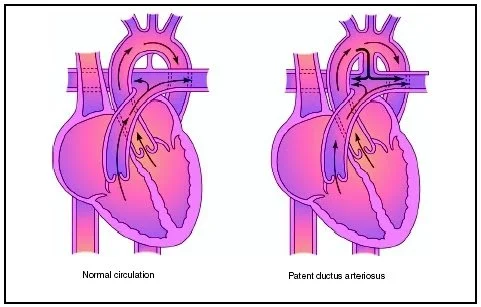
Patent ductus arteriosus (PDA) is a congenital heart defect, meaning it is a condition present at birth. To understand PDA, it’s helpful to first know how a baby’s circulation works before and after birth.
Before birth, a baby’s lungs are filled with fluid and are not used for breathing. Oxygen comes from the mother through the placenta. A normal fetal blood vessel called the ductus arteriosus serves as a vital shortcut. It connects the two major arteries leaving the heart—the aorta (which carries oxygen-rich blood to the body) and the pulmonary artery (which carries blood to the lungs). This connection allows most of the blood to bypass the baby’s non-functioning lungs.
In a full-term, healthy newborn, this ductus arteriosus typically closes on its own within the first few days of life as the baby begins to breathe air and pressure changes in the heart and lungs. When this vessel fails to close, it remains “patent” (open), resulting in a PDA.
How Common Is PDA? Understanding the Global and Local Burden
PDA is one of the most common types of congenital heart disease. The global prevalence is estimated to be around 1 in 1,000 live births. However, its occurrence is strongly linked to prematurity. The earlier a baby is born, the higher the risk:
- Affects about 10% of babies born between 30 and 37 weeks of pregnancy.
- Affects about 80% of babies born between 25 and 28 weeks of pregnancy.
- Can affect up to 90% of babies born earlier than 24 weeks of pregnancy.
The Nigerian Context: Data on Congenital Heart Disease
Accurate data on congenital heart defects (CHD), including PDA, is critical for healthcare planning. A pivotal 2021 study conducted in Jos, Nigeria, provided important local insights. This study screened 3,857 newborns and found:
- The overall prevalence of any congenital heart defect was 28.8 per 1,000 live births.
- This translates to approximately 1 in 35 newborns in the studied population having some form of CHD.
While this study did not break down the prevalence of PDA specifically, it highlighted the significant burden of heart defects from birth in Nigeria and underscored the urgent need for improved diagnostic and treatment services. A separate Nigerian study focusing on surgical outcomes for PDA reported that PDA constitutes between 10% and 15% of all congenital cardiac lesions in children, making it the second or third most common.
What Causes PDA?
The exact reason why the ductus arteriosus fails to close in some babies is not always known. However, several key risk factors have been identified:
- Prematurity: This is the most significant risk factor. The mechanisms that trigger the closure of the ductus are underdeveloped in premature infants.
- Genetic Factors: A family history of congenital heart defects or certain genetic syndromes (like Down syndrome) can increase the risk.
- Maternal Health During Pregnancy: Infections such as rubella (German measles) can increase the risk of PDA and other heart defects. Other factors may include uncontrolled diabetes or the use of certain medications.
- Gender: PDA is twice as common in girls than in boys.
Recognizing the Symptoms of PDA
The symptoms of a PDA depend largely on the size of the opening and the amount of excess blood flow to the lungs.
Small PDAs may not cause any noticeable symptoms at all. Often, the only sign is a heart murmur—an extra “whooshing” sound a doctor can hear with a stethoscope—caused by blood flowing through the persistent opening.
Larger PDAs can cause symptoms because the heart and lungs have to work harder. In babies, these symptoms may include:
- Fast, hard, or labored breathing
- Poor feeding or tiring easily during feeds
- Sweating during feedings
- Slow weight gain or failure to thrive
- Frequent respiratory infections
In Nigeria, studies show that infants presenting with symptomatic PDA often experience recurrent respiratory tract infections, breathlessness, and significant failure to thrive. One study noted that 30% of infants presenting for PDA surgery had a severe weight deficit (≥40% below the expected weight for their age).
How Is PDA Diagnosed?
Diagnosis typically follows a sequence that starts with a routine checkup:
1. Physical Exam: A healthcare provider may suspect PDA after hearing a characteristic heart murmur during a physical examination.
2. Echocardiogram (Echo): This is the primary and most important test for confirming PDA. It is an ultrasound of the heart that creates detailed images, allowing doctors to:
- Visualize the open ductus arteriosus.
- Measure its size and shape.
- See the direction of blood flow through it.
- Assess whether the heart chambers are enlarged from the extra work.
3. Other Supporting Tests: A chest X-ray may show fluid in the lungs or an enlarged heart. An electrocardiogram (ECG or EKG) can check for signs of heart strain.
The Challenge of Diagnosis in Resource-Limited Settings
The Nigerian study from Jos demonstrated the power of systematic screening, as it used echocardiography to detect heart defects that would have otherwise been missed. However, access to pediatric echocardiography remains a challenge in many regions. This often leads to late diagnosis, with children presenting only when symptoms become severe.
Treatment Options for PDA: From Monitoring to Surgery
Not every PDA requires immediate intervention. The treatment plan is tailored to the child’s age, the size of the PDA, and the presence and severity of symptoms.
- Observation (Watchful Waiting): Small PDAs with no symptoms. The PDA may close on its own, especially in premature infants. Regular checkups monitor for changes.
- Medication: Premature infants with symptomatic PDA. Nonsteroidal anti-inflammatory drugs (NSAIDs) like ibuprofen or indomethacin can help constrict and close the ductus. This is effective primarily in preemies.
- Catheter-Based Closure: Older infants, children and adults with a PDA of suitable size. A minimally invasive procedure. A thin tube (catheter) is threaded from a leg vessel to the heart. A plug or coil is deployed to block the PDA. Recovery is usually quick.
- Surgical Closure: Very large PDAs; very small infants; when catheterization isn’t suitable. Performed via a small incision in the side of the chest. The surgeon closes the PDA with stitches or a metal clip. This is a definitive treatment with an excellent success rate.
Surgical Success in Nigeria
A study from a cardiac center in Enugu, Nigeria, reported on 30 infants who underwent surgical PDA closure. The results were encouraging:
- All procedures were successful in closing the PDA.
- There were no procedure-related deaths, demonstrating that with proper expertise and support, excellent outcomes can be achieved locally.
- The study highlighted the positive impact of international collaborations in building sustainable cardiac care capacity in Nigeria.
Prognosis and Long-Term Outlook
The long-term outlook for a child with a PDA is generally excellent, especially when the defect is diagnosed and treated appropriately.
- After Successful Closure: Most children go on to lead full, healthy, and active lives with no restrictions on their activities. They require only periodic follow-up with a cardiologist.
- Untreated PDA: If a moderate or large PDA is left untreated, it can lead to serious complications over time, including:
- Heart failure (as the heart weakens from overwork)
- Pulmonary hypertension (high blood pressure in the lungs)
- Infective endocarditis (an infection of the heart’s lining)
The focus in cardiac care has rightly evolved from simply ensuring survival to maximizing long-term quality of life. This means supporting not just the heart’s function, but also the child’s neurodevelopment, emotional health, and overall well-being.
Conclusion: A Treatable Condition with a Bright Future
A diagnosis of patent ductus arteriosus can understandably cause concern for any parent. However, it is crucial to know that PDA is a well-understood and highly treatable heart condition. From small defects that close on their own to larger ones repaired with modern, minimally invasive techniques, medical science offers clear and effective pathways to a cure.
The key to the best outcome is timely diagnosis and access to appropriate care. For families in Nigeria, growing local expertise and dedicated cardiac centers are improving the landscape of pediatric heart care. By partnering with a skilled healthcare team, parents can confidently navigate their child’s treatment journey, leading to a healthy heart and a vibrant future.
Disclaimer: This article is for informational purposes only and does not constitute medical advice. Please consult a qualified healthcare professional for diagnosis, treatment and personalized medical guidance.