
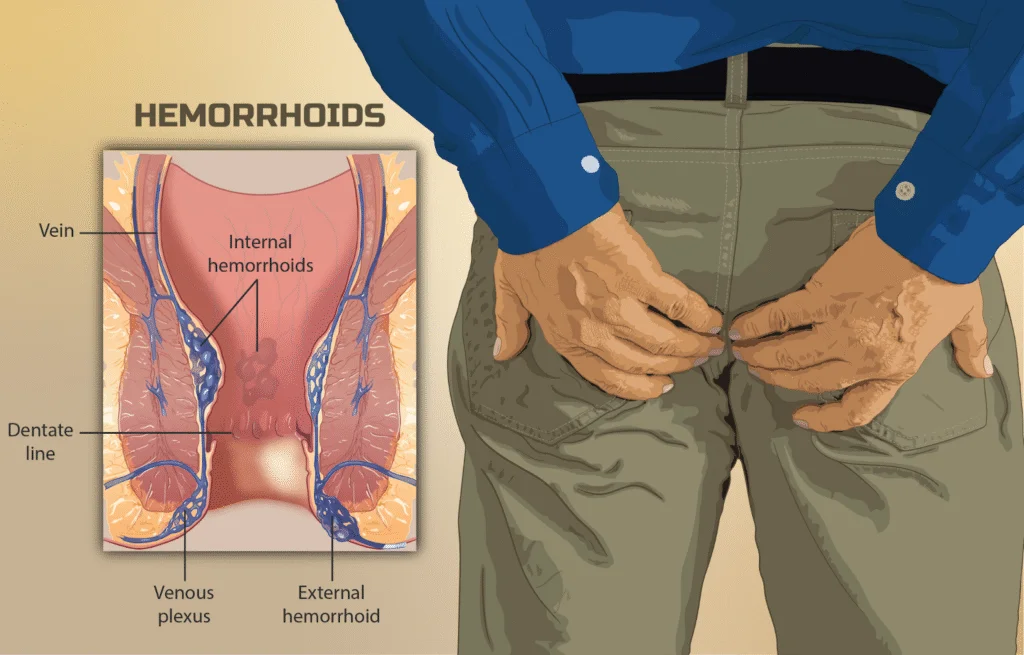
Piles or haemorrhoids, are a common condition affecting up to 1 in 20 adults, involving swollen veins in the rectum or anus that can cause bleeding, itching and discomfort. While often manageable at home, seeking medical advice is crucial for proper diagnosis and treatment, especially when symptoms persist or include rectal bleeding.
Overview: What Are Hemorrhoids?
Hemorrhoids, commonly known as piles, are swollen and enlarged veins located in your lower rectum and anus. It’s important to know that everyone is born with hemorrhoidal tissue; it’s only when these vascular cushions become swollen, inflamed or symptomatic that they become a medical condition requiring attention.
This condition is extremely common, affecting people of all ages and backgrounds. Symptoms become more frequent with age, impacting over half of people over the age of 50. In the United States alone, hemorrhoids account for millions of outpatient visits annually. While often a source of embarrassment, they are a normal medical issue that healthcare providers diagnose and treat regularly.
Types of Hemorrhoids
Hemorrhoids are classified based on their location, which determines their symptoms and treatment.
- Internal Hemorrhoids: Inside the rectum. Usually painless but may cause bright red bleeding during bowel movements. Can prolapse (protrude out of the anus).
- External Hemorrhoids: Under the skin around the anus. Can be itchy, painful and sometimes bleed. Often felt as a lump.
- Prolapsed Hemorrhoids: Internal hemorrhoids that stretch and bulge outside the anus. May cause pain and bleeding and often require manual pushing back inside.
- Thrombosed Hemorrhoids: A blood clot forms within an external hemorrhoid. Causes a sudden, severe pain and a firm, purple-blue lump near the anus.
Hemorrhoids are also graded by severity, which guides treatment decisions:
- Grade I: Visible hemorrhoids that do not prolapse.
- Grade II: Hemorrhoids that prolapse during straining but reduce spontaneously.
- Grade III: Hemorrhoids that prolapse and require manual reduction.
- Grade IV: Permanently prolapsed, non-reducible hemorrhoids.
Symptoms and Causes
Common Symptoms
Symptoms vary by type. Internal hemorrhoids often present with painless rectal bleeding, which you might notice as bright red blood on toilet paper, in the toilet bowl, or coating the stool. Other symptoms include:
- Itching or irritation in the anal region.
- Discomfort, pain, or ache in the anus, especially when sitting.
- A feeling of incomplete bowel evacuation.
- For prolapsed hemorrhoids: feeling or seeing a soft lump protruding from the anus.
A thrombosed hemorrhoid typically presents as a sudden, severe pain and a tender, firm lump that may appear blue or purple.
What Causes Hemorrhoids?
Hemorrhoids develop from increased pressure on the veins in the pelvic and rectal area. Common causes and risk factors include:
- Straining during bowel movements, often due to chronic constipation.
- Sitting for long periods on the toilet, which increases pressure in the veins.
- A low-fiber diet, leading to harder stools.
- Chronic diarrhea or constipation.
- Pregnancy and childbirth, due to increased pelvic pressure.
- Obesity.
- Heavy lifting or strenuous activity.
- Aging, as supporting tissues in the rectum and anus weaken.
A notable modern risk factor is the habit of using cell phones or reading while on the toilet, which prolongs sitting time and straining.
Diagnosis and Tests
Diagnosing hemorrhoids is typically straightforward. Your healthcare provider will start with a discussion of your symptoms and medical history.
A physical examination, including a visual check of the anal area, is usually performed. Your provider may also conduct a digital rectal exam (DRE), inserting a gloved, lubricated finger into the rectum to feel for abnormalities.
To get a clearer view, they might use:
- Anoscopy: A short, lighted tube (anoscope) to examine the anal canal and lower rectum.
- Sigmoidoscopy or Colonoscopy: These are not routinely needed for hemorrhoid diagnosis but may be recommended to rule out other causes of rectal bleeding, such as colorectal cancer, polyps, or inflammatory bowel disease—especially if you are over 40 or have a family history of such conditions.
Management and Treatment
Treatment depends entirely on the type, grade, and severity of your symptoms. The primary goal is always to relieve symptoms and address underlying causes like constipation.
At-Home and Conservative Treatments
For mild symptoms, initial treatment focuses on lifestyle and dietary changes:
1. Increase Fiber and Fluids: A high-fiber diet (25-38 grams daily) and plenty of water soften stool, reducing straining.
2. Improve Bathroom Habits: Follow the “TONE” mnemonic: Three minutes max, Once daily, No straining or phones, Enough fiber.
3. Sitz Baths: Soaking the anal area in warm water for 10-20 minutes daily can relieve itching and pain.
4. Topical Treatments: Over-the-counter creams, ointments, or suppositories containing hydrocortisone, witch hazel, or lidocaine can provide temporary relief.
5. Oral Medications: Pain relievers like NSAIDs can help. Phlebotonics (like certain flavonoids) may improve symptoms like bleeding and itching, though evidence for long-term use is limited.
Office-Based Procedures
When conservative measures fail, several effective in-office procedures are available for Grade I-III internal hemorrhoids.
- Rubber Band Ligation (RBL): A small band is placed around the hemorrhoid’s base to cut off its blood supply. It is for Grade I-III internal hemorrhoids. Most common office procedure, the banded tissue sloughs off in a few days.
- Sclerotherapy: A chemical solution is injected to shrink the hemorrhoid. It is for Grade I & II internal hemorrhoids. Newer foam sclerosants (e.g., polidocanol foam) show high patient satisfaction.
- Infrared Coagulation (IRC): Infrared light creates heat to coagulate blood vessels. It is for Grade I & II internal hemorrhoids. Less commonly used today compared to RBL.
A Nigerian Perspective on Office Procedures: A 2019 prospective study from Obafemi Awolowo University Teaching Hospital compared rubber band ligation to injection sclerotherapy using 50% dextrose water for second- and third-degree hemorrhoids. The study, which included patients presenting with symptoms like anal protrusion (40.5%) and bleeding (38.8%), found that rubber band ligation had a significantly higher success rate for resolving anal protrusion and required fewer treatment sessions. While band ligation was associated with more initial pain, it proved to be a more efficient treatment in this local context.
Surgical Treatments
Surgery is reserved for large, prolapsed, or symptomatic hemorrhoids not responding to other treatments.
- Hemorrhoidectomy: The surgical removal of hemorrhoids. It’s highly effective but involves more postoperative pain and recovery time. Techniques include traditional excision (Milligan-Morgan) and closed (Ferguson) methods.
- Hemorrhoid Stapling (Stapled Hemorrhoidopexy): A procedure that removes a ring of tissue above the hemorrhoid to block blood flow and pull prolapsed tissue back into place. It’s often less painful than traditional excision.
- Transanal Hemorrhoidal Dearterialization (THD): A minimally invasive technique that uses Doppler ultrasound to locate and tie off the arteries supplying the hemorrhoid.
Laser Piles Surgery: A Modern, Minimally Invasive Solution
Are you seeking lasting relief from piles (haemorrhoids) but concerned about the pain and long recovery of traditional surgery? Laser piles surgery offers a ground-breaking, patient-friendly alternative. This advanced procedure uses targeted laser energy to treat haemorrhoids with exceptional precision, resulting in less discomfort and a quicker return to your daily life.
How Laser Piles Surgery Works: Precision and Innovation
Laser treatment redefines haemorrhoid surgery by focusing on energy-based solutions rather than extensive cutting. The procedure is typically performed under local anaesthesia or light sedation, often as a day care treatment, allowing you to return home the same day.
1. The Procedure: A very fine laser fibre is gently inserted into the haemorrhoid tissue.
2. Targeted Action: The laser delivers concentrated energy that heats the affected tissue. This causes the haemorrhoid to shrink and retract.
3. Instant Sealing: As it works, the laser simultaneously seals the blood vessels, which significantly minimizes bleeding during and after the procedure.
4. Tissue Preservation: The laser’s energy is precisely controlled, targeting only the problematic veins while preserving the surrounding healthy tissue.
Types of Laser Procedures for Piles
Our specialists tailor the approach based on your specific condition, utilizing advanced laser techniques:
- Laser Haemorrhoidoplasty (LHP): Uses laser energy to contract and reshape the hemorrhoidal cushions.
- Haemorrhoidal Laser Procedure (HeLP): Focuses on sealing the tiny arteries that supply blood to the hemorrhoids, causing them to reduce in size.
- Laser Haemorrhoidectomy: Employed for larger or prolapsed piles, where the laser is used to carefully remove the hemorrhoidal tissue.
Why Choose Laser Surgery for Piles? The Key Benefits
Opting for laser treatment means choosing a path designed for comfort and convenience. Here’s how it compares to traditional surgery:
- Truly Minimally Invasive: The procedure requires no large incisions, often involving only the tiny insertion point for the laser fiber.
- Significantly Less Pain: By avoiding the cutting of sensitive anal tissue, patients experience markedly less post-operative pain and discomfort.
- Reduced Bleeding Risk: The laser cauterizes blood vessels as it works, leading to minimal bleeding.
- Faster Recovery & Return to Normalcy: Many patients resume light activities within days and a full routine within a week or two, a much quicker timeline than traditional surgery.
- Day care Convenience: Most procedures are completed quickly, allowing you to recover in the comfort of your home on the same day.
- Enhanced Safety Profile: Frequently performed under local anaesthesia, it reduces the risks associated with general anaesthesia.
Managing Post-Surgical Pain: Postoperative pain is a major concern, with studies indicating up to 40% of patients experience significant pain after hemorrhoidectomy, often peaking in the first 24-48 hours. Modern pain management emphasizes a multimodal approach, combining medications with non-pharmacological methods like proper wound care and structured health education to improve recovery outcomes.
Prevention
Prevention focuses on reducing pressure and straining in the rectal area:
- Eat a high-fiber diet with plenty of fruits, vegetables, and whole grains.
- Drink adequate water throughout the day.
- Exercise regularly to stimulate bowel function.
- Avoid prolonged sitting, especially on the toilet.
- Go to the bathroom as soon as you feel the urge; don’t delay.
- Avoid straining during bowel movements or when lifting heavy objects.
Living With Hemorrhoids and When to Seek Help
Most hemorrhoid flare-ups improve within a week with conservative care. You should contact a healthcare provider if you experience:
- Severe pain or rectal bleeding.
- Symptoms that don’t improve after a week of home treatment.
- Bleeding that is persistent or heavy (this requires evaluation to rule out serious conditions like cancer).
- Fever, chills, nausea, or vomiting accompanying rectal symptoms.
Remember, while discussing rectal issues can feel embarrassing, hemorrhoids are a very common problem. Healthcare providers are trained to handle these concerns with sensitivity and professionalism to get you the relief you need.
Disclaimer: This article is for informational purposes only and does not constitute medical advice. Please consult a qualified healthcare professional for diagnosis and treatment.